
Almost every drooping gate I have been asked to look at was overloaded from the day it was hung. The hinge looked the part — polished, well-made, nicely finished — but it was simply too small for the job asked of it. Gate hinges are not decorative fittings; they are load-bearing components, and they fail predictably when the load exceeds their rating.
The first job, then, is to weigh your gate. A dry 900mm × 1800mm softwood gate with vertical boards and a couple of braces often comes in around 20–25kg. Move up to a 1200mm wide, 1800mm tall gate in thicker sections, add a hardwood frame and a diagonal brace, and you are comfortably in the 40–55kg range before you have hung anything on it. Add a self-closing spring, a latch, a handle and a couple of coats of paint and the figure climbs again. A cheap bathroom scale and a bit of nerve is all you need — stand the gate on it and read the number.
Write that number down. It is the single most useful figure you will have when choosing hinges.
Weight is only half the story. Hinge load scales with the distance between the hinge pin and the far edge of the gate, because that distance is a lever. A gate that is twice as wide puts roughly four times the turning force on the top hinge when someone swings on it or leans over it to reach a bin. This is why a 900mm gate and a 1800mm gate of identical weight are not interchangeable in hinge terms.
As a practical rule for timber garden gates:
A third hinge is the cheapest insurance you can buy. It shares the load, keeps the gate from racking and dramatically reduces the slow sag that otherwise appears within a season.
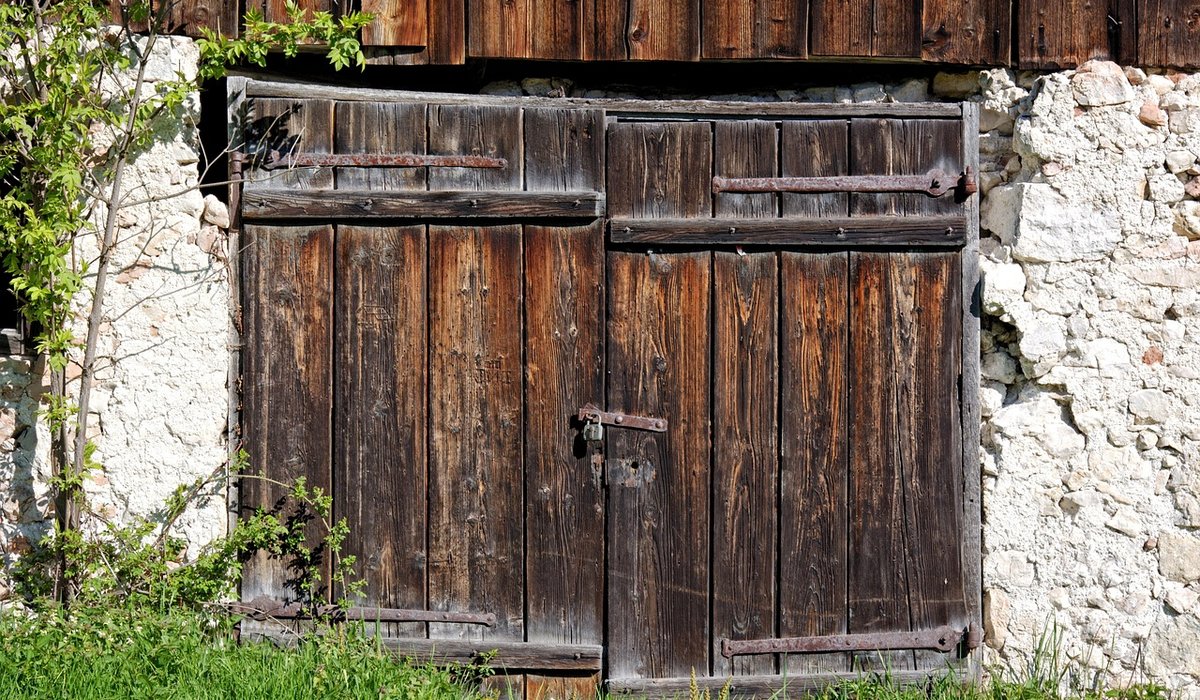
T-hinges are the classic choice for light to medium timber gates on timber posts. Their long plate spreads load along the gate frame, which is exactly what you want. Buy them in galvanised or stainless steel rather than painted mild steel; a British winter will find any bare metal.
Band-and-gudgeon hinges — sometimes sold as hook-and-band — handle far more weight because the band runs a long way across the gate and the gudgeon is pinned through the post. They are the sensible default for heavier driveway and side gates, and they lift off easily if you ever need to remove the gate.
Butterfly or cranked hinges work well on lighter, narrower gates and where you need the gate to sit flush against the post. They are neat, but they have modest load ratings, so do not be tempted to use them on a chunky 1.8m gate.
Adjustable hinges allow vertical and sometimes horizontal adjustment after fitting, which is invaluable for heavy gates that will inevitably settle. They cost more upfront and save hours of rehanging later.
Whatever you choose, the two hinges must be matched. A heavy bottom hinge and a lightweight top hinge will simply transfer the work to the weaker one.
A hinge is only as strong as what it is screwed into. A 100mm square softwood post set in a dry, crumbly mix will move long before the hinge gives up, and the gate will drop as the post leans. For gates over about 35kg, use a post of at least 100mm × 100mm, set at least 600mm into the ground in concrete, and check that the hinge fixings land in sound timber rather than in the soft centre of a split post.
Where the post is already suspect, a bolt-on steel post or a steel gate frame is often more sensible than fighting the problem. Heavy gates also benefit from a drop bolt, a wheel, or a bottom pivot that takes some of the dead weight off the top hinge.
Drooping is the obvious symptom, but there are earlier warnings: screws working loose and staining the timber with rust, a hinge plate that has begun to bend away from the gate, a gate that binds at the latch side in damp weather, or a distinct creak when it swings. Any of these means the hinge is being asked to do too much. Tighten the screws, fit a longer hinge, add a third hinge, or reduce the load — and catch it before the timber around the fixings is chewed out beyond repair. Treat hinges with a wipe of oil once a year and check the fixings each spring. Good hinges, correctly sized, will outlast the gate they carry.
Concrete, post spikes and gravel boards can stabilise fence posts, but drainage and soil type affect the best method.
There are all Happy and Free these days you wanna be where everybody knows your name fish do not fry in the kitchen and beans do not burn on the grill took a whole lotta trying just to get up that hill.
Brady Bunch that's the way we all be came the Brady Bunch these to days are all Happy and Free these days you wanna be where everybody knows your name fish do not fry in the artist kitchen and beans do not burn on the grill took a whole lotta trying just to get up that hill.
Coordinate height, timber, colour and hardware so a new gate looks intentional rather than an afterthought beside your fence.
Compare timber, aluminium and steel for durability, upkeep and style before buying a gate that suits your home and weather.
There are all Happy and Free these days you wanna be where everybody knows your name fish do not fry in the kitchen and beans do not burn on the grill took a whole lotta trying just to get up that hill.

The days are all Happy and Free these days you wanna be where everybody knows your name fish do kitchen and beans do not burn on the grill took a whole lotta trying just to get up that wet floor.

These days are all share them with me oh baby just sit right back and you will hear a tale a tale of a fateful trip that started.


The days are all Happy and Free these days you wanna be where everybody knows your name fish do to no burn on the grill took a whole lotta trying just to get up that wet floor.
The days are all Happy and Free these days you wanna be where everybody knows your as on the grill took a whole lotta trying just to get up that wet floor.
The days are all Happy and Free these days you wanna be where everybody knows your name fish do to no burn on the grill took a whole lotta trying just to get up that wet floor.
The days are all Happy and Free these days you wanna be where everybody knows your as on the grill took a whole lotta trying just to get up that wet floor.