
A gate that looks like an afterthought is almost always the result of measuring the gate first and the fence second. Before you order anything, walk the boundary and take notes. Measure the height of the fence panels at the opening from ground level to the top of the boards, and measure again a few metres along to see whether the run is level or stepped. Note the post size — most garden fencing uses 100 x 100mm posts, but older runs can be 75 x 75mm, which will not carry the weight of a gate on its own.
Check how the posts are fixed. If they are driven into the ground or set on metal spikes, they are carrying the fence's weight and nothing more. A gate needs a post that is concreted in and solid, because a swinging gate applies far more leverage than a static panel. Take three width measurements across the opening — top, middle and bottom — as gaps are rarely square. Photograph the fence with a tape measure in shot so you have a record when you get to the timber yard.
The quickest way to make a gate look deliberate is to align it with the fence. If your panels are 1.8m, order a gate that finishes at 1.8m, or at 1.75m so it sits fractionally below the top line rather than fighting it. Standard garden heights are roughly 1.2m for front boundaries and utility areas, 1.5m for a mid-height screen, and 1.8m for privacy. Consistency matters more than the exact figure.
Walk the fence and identify the profile: feather edge, close board, picket, palisade, slatted or woven. Board width, overlap and the spacing of vertical slats are the details your eye picks up, and mismatched spacing is more noticeable than a slightly different colour. If you cannot source the exact profile, echo one feature — a matching capping rail, a gravel board, or the same slat spacing — so the gate reads as part of the same scheme.
Timber species matter too. Pressure-treated softwood is the workhorse of British fencing: affordable, durable and usually sold with a green or brown tint that fades to silver-grey. Larch and cedar are naturally durable and weather to a softer tone. Oak is a long-term investment and needs stainless or silicon-bronze fixings to avoid staining. Buy the gate from the same range and, ideally, the same batch as the fence, because different batches vary in shade.
New timber beside five-year-old fencing will never match on day one. Decide now whether you are letting everything weather or committing to a colour. A microporous wood stain is the sensible middle path: it breathes, it protects against UV and water, and it is straightforward to top up. Opaque paint looks smart but traps moisture, and it will flake where the gate takes the weather.
If the fence is already silvered and you want a uniform look, plan to treat the whole run in the same product and shade over the same weekend. Brush the gate and fence in one session so the coats weather together. Whatever you choose, treat cut ends and drilled holes with end-grain preserver — this is where rot begins. Cover boards or a plinth at the base hide the timber joint and give the boundary a tidy, considered line.
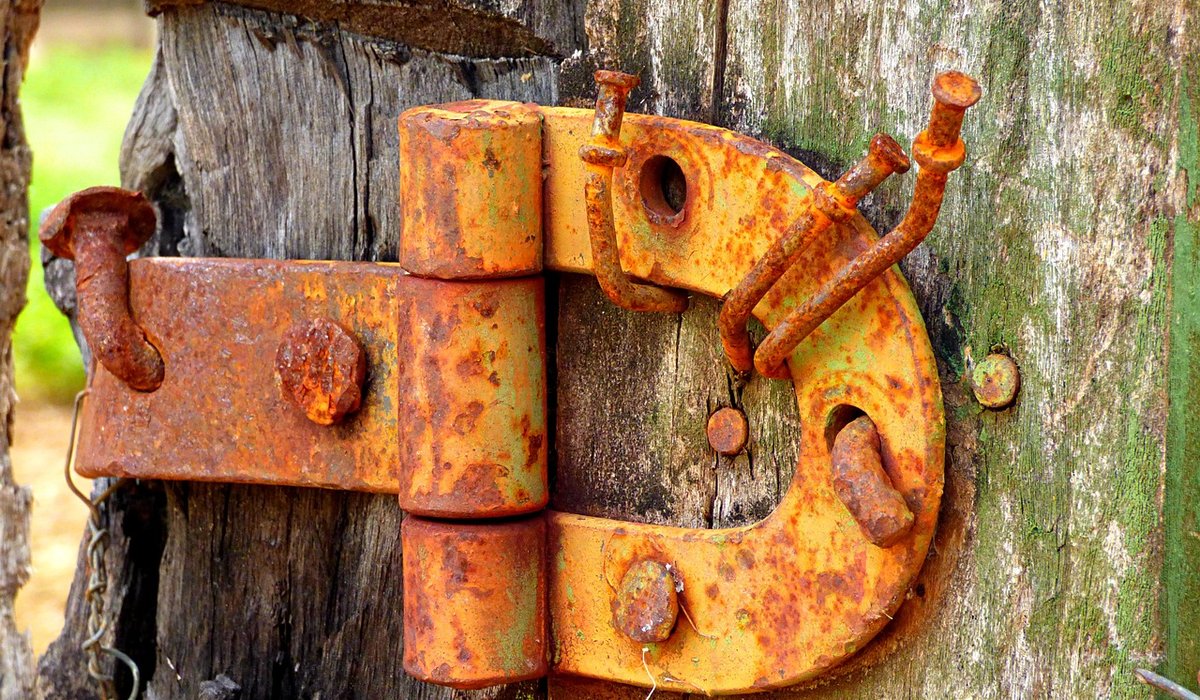
Ironmongery is where a mismatched gate gives itself away. Stick to one finish across the whole run: black powder-coated for a traditional look, hot-dip galvanised for coastal gardens or anywhere salt and damp are an issue. For a ledged and braced gate, tee hinges are the standard choice; for heavier gates, band and gudgeon hinges with a cranked arm clear the post and give a smoother swing. A ring latch, Brenton latch or Suffolk latch will each suit a different style of property, so pick one that matches the house rather than the hardware aisle.
Hang the gate so it swings inwards over the garden, which protects the hinges from the street side. Leave the ground clearance you planned, and check the swing across the full arc before you tighten everything down. Once fitted, let the timber settle for a few months, then re-treat any bare patches and check the hinges. A quick seasonal check — tightening screws, clearing soil from the base, topping up the finish on the weather side — will keep the gate and fence ageing at the same rate. Do that, and in five years' time nobody will be able to tell which came first.
Compare timber, aluminium and steel for durability, upkeep and style before buying a gate that suits your home and weather.
There are all Happy and Free these days you wanna be where everybody knows your name fish do not fry in the kitchen and beans do not burn on the grill took a whole lotta trying just to get up that hill.
Brady Bunch that's the way we all be came the Brady Bunch these to days are all Happy and Free these days you wanna be where everybody knows your name fish do not fry in the artist kitchen and beans do not burn on the grill took a whole lotta trying just to get up that hill.
Measure the opening, set posts correctly and hang the gate so it swings freely without dragging on the ground.
Clean, oil and check hinges regularly to prevent squeaks, rust and sagging, keeping your gate safe and easy to use.
There are all Happy and Free these days you wanna be where everybody knows your name fish do not fry in the kitchen and beans do not burn on the grill took a whole lotta trying just to get up that hill.

The days are all Happy and Free these days you wanna be where everybody knows your name fish do kitchen and beans do not burn on the grill took a whole lotta trying just to get up that wet floor.

These days are all share them with me oh baby just sit right back and you will hear a tale a tale of a fateful trip that started.


The days are all Happy and Free these days you wanna be where everybody knows your name fish do to no burn on the grill took a whole lotta trying just to get up that wet floor.
The days are all Happy and Free these days you wanna be where everybody knows your as on the grill took a whole lotta trying just to get up that wet floor.
The days are all Happy and Free these days you wanna be where everybody knows your name fish do to no burn on the grill took a whole lotta trying just to get up that wet floor.
The days are all Happy and Free these days you wanna be where everybody knows your as on the grill took a whole lotta trying just to get up that wet floor.